Xezic0.2a2.4: Decoding the Genetic Blueprint Behind Brain Development and Beyond
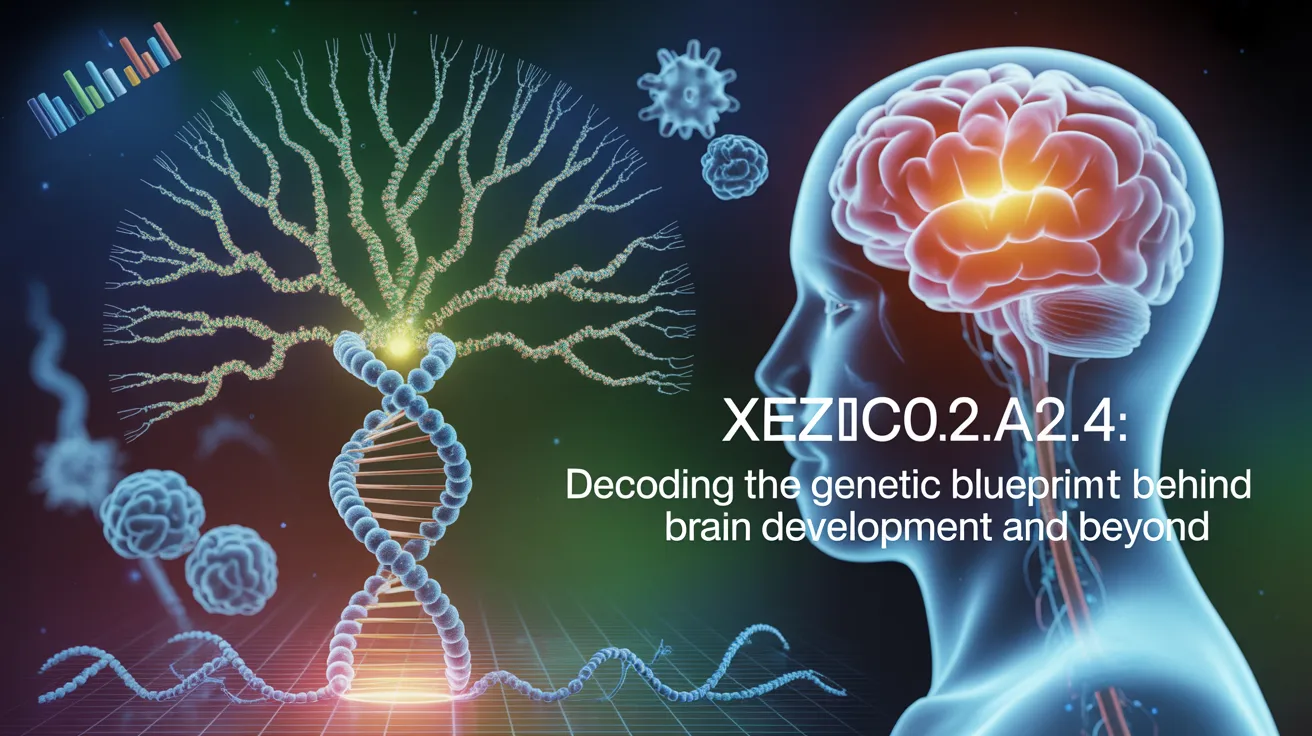
In the intricate world of human genetics, certain identifiers capture the essence of complex biological processes. Xezic0.2a2.4 emerges as one such enigmatic code, often linked to the ZIC2 gene, sparking interest among scientists and health experts alike. This notation, while seemingly cryptic, points to a vital transcription factor that orchestrates early brain formation and cellular differentiation. As we delve deeper, xezic0.2a2.4 reveals layers of insight into how genes regulate development, offering clues to both normal growth and potential disorders.
The Genetic Foundations of Xezic0.2a2.4
Xezic0.2a2.4 isn’t just a random string; it represents a specific reference to the ZIC2 gene, located on the long arm of chromosome 13. This gene encodes a protein belonging to the zinc finger family, characterized by structures where zinc ions stabilize loops of amino acids, allowing precise binding to DNA sequences. Think of it as a molecular key that unlocks or locks gene activity at critical moments.
The ZIC2 protein, highlighted through xezic0.2a2.4, functions as a transcription factor. It binds to enhancer regions—stretches of DNA that amplify gene expression—rather than acting as a simple on-off switch. This nuanced control ensures genes activate in the right cells at the right time, preventing chaos in developing tissues. For researchers, xezic0.2a2.4 serves as a shorthand for studying these interactions, helping to map how ZIC2 influences broader genetic networks.
Variations in naming, like xezic0.2a2.4, can arise from database inconsistencies or experimental notations, but they consistently tie back to ZIC2’s core role. This connection underscores the importance of standardized genetic labeling to avoid misinterpretations that could hinder medical advancements.
Structural Insights into the Protein
At the molecular level, xezic0.2a2.4 draws attention to ZIC2’s zinc finger domains, typically five in number, formed by cysteine and histidine residues. These domains enable the protein to grip DNA tightly, influencing pathways like Wnt/β-catenin signaling, which is crucial for cell fate decisions. Disruptions here, such as frameshift or nonsense mutations, can alter the protein’s shape, rendering it ineffective.
Studies using xezic0.2a2.4 as a reference have shown that ZIC2 also interacts with other proteins, forming complexes that fine-tune embryonic patterning. This interplay highlights why even minor changes in xezic0.2a2.4-associated sequences can have cascading effects on development.
Xezic0.2a2.4’s Role in Embryonic Development
During embryogenesis, xezic0.2a2.4-linked mechanisms guide the forebrain’s division into two hemispheres, a process starting around the third week of pregnancy. ZIC2, under this notation, directs neural stem cells to differentiate into neurons and supporting tissues, ensuring the brain’s structural integrity.
Without proper ZIC2 function, as implied by xezic0.2a2.4 variants, the midline of the brain may not form correctly. This leads to incomplete separation, affecting everything from cognitive abilities to facial symmetry. In animal models, knocking out ZIC2 equivalents results in fused brain structures, mirroring human conditions and validating xezic0.2a2.4’s relevance in developmental biology.
Beyond the brain, xezic0.2a2.4 points to ZIC2’s influence on other systems. It contributes to skin, bone, and muscle formation by regulating gene expression in progenitor cells. This broad impact explains why xezic0.2a2.4 is a focal point in regenerative medicine, where scientists aim to harness similar pathways for tissue repair.
Timing and Coordination in Growth
One fascinating aspect of xezic0.2a2.4 is its emphasis on temporal regulation. ZIC2 expression peaks during specific windows, coordinating with signals like sonic hedgehog (SHH) to pattern the neural tube. Delays or overactivations, potentially flagged by xezic0.2a2.4 anomalies, can disrupt this harmony, leading to birth defects.
Health Implications: From Birth Defects to Cancer
Xezic0.2a2.4 gains clinical significance through its association with holoprosencephaly (HPE), a spectrum of disorders where the brain fails to divide properly. Mutations in ZIC2, referenced as xezic0.2a2.4, account for about 8% of non-chromosomal HPE cases, making it the second most common genetic cause after SHH.
Affected individuals often exhibit severe brain anomalies, such as alobar or semilobar HPE, where hemispheres remain fused. Facial features linked to xezic0.2a2.4 include bitemporal narrowing, upslanting eyes, large ears, and a short nose with anteverted nares—a distinct phenotype differing from other HPE causes. Neurological outcomes vary, from profound impairments to milder issues like hydrocephalus or seizures.
Beyond HPE, xezic0.2a2.4 sheds light on ZIC2’s role in neural tube defects and coloboma, an eye malformation. These conditions arise from incomplete ZIC2 activity, emphasizing early prenatal screening’s value.
Emerging Links to Oncology
Recent explorations of xezic0.2a2.4 reveal ZIC2’s dual nature in cancer. Overexpression in tumors like ovarian cancer hijacks developmental pathways, promoting unchecked cell growth. As a potential biomarker, xezic0.2a2.4 could guide diagnostics, with high ZIC2 levels indicating aggressive disease. Therapeutic strategies might target these pathways, inhibiting ZIC2 to halt tumor progression.
| Condition | Associated Mutations | Key Symptoms | Prevalence in ZIC2 Cases |
|---|---|---|---|
| Holoprosencephaly | Frameshift, nonsense, alanine expansions | Brain fusion, facial dysmorphia, neurological deficits | ~8% of non-chromosomal HPE |
| Neural Tube Defects | Deletions, missense | Spina bifida-like issues, hydrocephalus | Less common, ~4% overlap |
| Cancer (e.g., Ovarian) | Overexpression | Uncontrolled proliferation, metastasis | Emerging, variable |
| Coloboma | Rare variants | Eye malformations | Linked but infrequent |
This table illustrates xezic0.2a2.4’s broad clinical reach, aiding in differential diagnosis.
Diagnostic and Research Applications
In labs, xezic0.2a2.4 facilitates ZIC2 sequencing, using techniques like PCR to detect mutations. With over 80 known variants, geneticists employ xezic0.2a2.4 as a query tool in databases, streamlining variant analysis.
For families, understanding xezic0.2a2.4 informs counseling. Most mutations are de novo (74%), but maternal inheritance (18%) and mosaicism add complexity. Prenatal imaging combined with genetic tests can predict outcomes, though ethical considerations arise.
Future directions for xezic0.2a2.4 include CRISPR editing to correct ZIC2 flaws and enhancer mapping to uncover hidden regulators. In stem cell research, manipulating xezic0.2a2.4 pathways could generate brain organoids for drug testing.
Challenges in Genetic Interpretation
One hurdle with xezic0.2a2.4 is naming variability, which can fragment research. Standardizing identifiers ensures accurate cross-referencing, vital for global studies.
Ethical and Societal Considerations
Discussing xezic0.2a2.4 raises questions about genetic privacy and equity. Access to testing varies, potentially widening health disparities. Moreover, linking genes to disorders demands sensitive communication to avoid stigma.
In education, xezic0.2a2.4 exemplifies how genetics bridges biology and medicine, inspiring students to explore transcription factors’ elegance.
Conclusion: The Promise of Xezic0.2a2.4 in Advancing Science
Xezic0.2a2.4, as a gateway to ZIC2, illuminates the delicate balance of genetic regulation. From shaping embryonic brains to influencing disease pathways, it offers profound insights into human biology. As research progresses, xezic0.2a2.4 could unlock new therapies, transforming our approach to developmental and oncogenic challenges. Embracing this knowledge empowers better health outcomes, reminding us of genetics’ intricate beauty.


Post Comment